How to Choose a Quad Bike Tour in Dubai
A quad bike tour dubai can be a straightforward choice once you know what to compare. The desert looks uniform from a distance, but routes, riding time, group size, safety setup and timing can change the experience a great deal. The aim is not simply to pick the first available ride. It is to match the tour to your confidence, schedule and idea of a good day out.
Start with the kind of rider in your group. A child, a cautious first timer and an experienced rider will not all enjoy the same format. Some tours are built around steady riding across open sand, while others lean into dune bashing and faster sections. If anyone is nervous, choose a calmer option with clear guidance and enough time to get comfortable before the pace increases.
Decide what you want from the ride
Before comparing listings, settle on the purpose of the outing. Some people want a short burst of driving in the sand. Others want a longer desert safari with stops, photos and a sunset view. These are different products even when both mention a quad bike. A shorter ride may feel focused and easy to fit into a busy day. A longer outing gives more variety, but it also asks more of your energy and attention.
Think about the balance between riding and waiting. Time spent collecting people, briefing, mounting, stopping and returning is part of the total experience. A listing that states riding time clearly is easier to judge than one that only gives a broad duration. If the schedule is vague, ask what the day actually includes and where the riding fits.
The terrain matters too. Flat stretches suit beginners because steering feels more predictable. Sand dunes bring better views and more excitement, but they also require more control and a willingness to follow instructions. A route with mixed terrain can work well if the guide keeps the pace sensible and gives riders time to adjust.
Check who can ride and what is required
Next, look at eligibility. Age limits, passenger rules and licensing conditions are common points of confusion. A driving license may be relevant for some vehicles or settings, while quad bikes are often treated differently. Do not assume the same rule applies to every machine. Check the requirement for the exact ride you are considering.
If children are joining, confirm whether they ride as passengers or on their own bike, and what safety equipment is provided. A helmet should fit properly, not just be present. A loose helmet can shift at the wrong moment, so it is worth checking fit before the ride begins. Closed shoes are sensible because feet can brush sand, footrests or rough ground.
Physical comfort is another practical point. Riding on sand uses the arms, shoulders, legs and core more than many people expect. Anyone with back, neck or joint concerns should think carefully about rough sections and long rides. When in doubt, choose a gentler route and speak up before departure rather than trying to cope once the group is moving.
Compare the safety setup, not just the route
Safety is not a single label. Look for a clear safety briefing, a route suited to the group and a guide who controls the pace. The briefing should explain hand signals, spacing, what to do if you need to stop and how to behave around other riders. Good instructions are short, direct and repeated when conditions change.
Watch for signs that the operator takes order seriously. A group that spreads out carelessly can create avoidable risk. Riders should understand that they need to keep a safe distance and avoid sudden turns near others. If someone is struggling, the pace should adjust. A tour that promises nonstop speed may sound thrilling, but it often suits a narrow type of rider only.
Equipment condition also deserves attention. Before setting off, look for obvious issues such as worn controls, damaged bodywork, unstable foot areas or a helmet that will not fasten properly. Small problems can spoil a ride and some are not safe to ignore. If something feels wrong, raise it before the group leaves. Mechanical repairs are a job for a qualified professional, not something to improvise in the desert.
When researching options, ATV Dubai Desert may appear alongside other desert activity names, so keep the comparison focused on the ride itself. Read carefully and separate the vehicle type from the wider package. A buggy, a bike and a safari vehicle are not interchangeable, and each asks for a different level of involvement from the rider.
Choose the right time of day
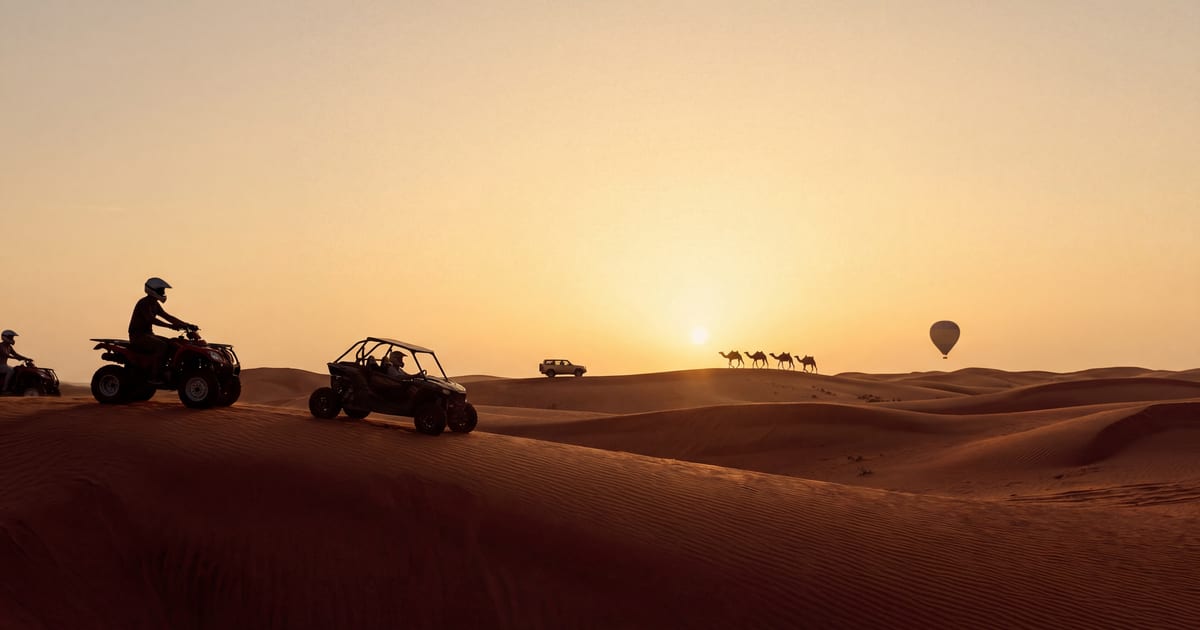
Timing changes both comfort and scenery. A morning ride usually feels cooler and the light is clear. Midday can be harsh, especially over open sand. A sunset tour is popular because the low light softens the dunes and gives the outing a more memorable setting. The trade-off is that later slots may be busier and cooler temperatures arrive after the sun drops.
Check how the timing fits with the rest of the day. If the tour includes transfers, waiting periods or other activities, the total time away can be longer than the riding segment. Bring water and wear clothing that covers skin without restricting movement. Sunglasses can help with glare, but they should sit securely under a helmet if worn during the ride.
Photography is another reason to think about timing. The best stops are not always the fastest stretches. A route that allows a brief pause for views can be more satisfying than one built only around driving. Ask whether there is time to take photos and whether phones or cameras are kept safely during rough sections.
Read the details before booking
Once a few options look suitable, compare them line by line. Pay attention to what is included, what riders need to bring and what happens if plans change. Clear terms are useful because they reduce surprises. A vague listing may still be fine, but it requires more questions before you commit.
Useful questions are simple ones. How long is the actual riding? Is the route suitable for beginners? Are helmets provided? Are passengers allowed? Is there a private option or a mixed group? What happens if the weather affects the ride? The answers should be specific enough to help you judge fit.
Be cautious with claims that sound too broad. Every rider being suitable, every route being easy or every condition being ideal are signs that the details need checking. A good choice is based on honest matching, not on the most dramatic description. If a listing avoids practical questions, move on or look for clearer information.
ATV Dubai Desert is one name you may notice while shortlisting, but the decision should still rest on the same practical points: rider ability, route, safety briefing, timing and clear terms. When those pieces line up, the tour is far more likely to feel enjoyable from start to finish.
Make the final choice with a calm eye
Choose the option that fits the least confident rider in the group, not the most adventurous one. That approach usually creates a better shared experience. If the route offers a controlled pace, clear instructions and a sensible length, most people will enjoy it more than a rushed ride built around speed alone.
On the day, arrive prepared, listen closely and treat the terrain with respect. Keep your distance, follow signals and stop if you feel unsure. A well chosen tour should leave room for fun, but it should also make safety feel like part of the routine rather than an afterthought. That balance is the real mark of a good quad bike tour dubai.